
Empowerment Starts Here
This site is dedicated to the professional and academic work of Dr. Angela Dye.
When Talent Becomes Structural
This is Week 7 in a 12 Week Series on Systems-based Leadership.
If you are the strongest person in every room, your system is underbuilt.
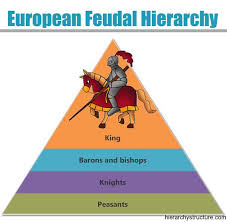
Most organizations operate with an unspoken assumption that talent follows hierarchy. The higher the position, the greater the presumed competence, judgment, and authority. Leadership becomes associated with intellectual and professional superiority, while those further from the top are treated as implementers rather than thinkers. Even when this assumption is never explicitly stated, it quietly shapes who is allowed to decide, who is expected to comply, and whose knowledge is considered legitimate.
In these environments, talent is imagined as a pyramid. Executives are presumed to be the most capable, managers the next most capable, and frontline workers the least. The structure itself communicates expectations about intelligence and authority long before any individual has demonstrated either. Hierarchy becomes not just a system of coordination but a system of presumed worth.
This pattern has deep historical roots. Early institutions were structured around inherited authority in which leaders were treated as natural superiors and subordinates as dependents. Authority flowed downward from a single source, and loyalty flowed upward in return. Modern organizations rarely describe themselves this way, yet many still operate according to the same underlying logic. Authority is treated as evidence of superiority rather than as a structural role.
When talent is presumed to decline as hierarchy descends, the organization becomes structurally weak. The system restricts its own intelligence, limiting decision-making to a narrow layer of authority while the majority of its potential remains unused. What appears to be a stable hierarchy is often a design that quietly suppresses the very strength the organization needs in order to grow.
An Alternative Philosophy of Leadership
Early in my career, I encountered a very different philosophy of leadership. In a setting focused on team development, I was taught that strong leaders intentionally surround themselves with people who are stronger than they are in specific areas. Leadership was not defined by dominance or superiority, but by expansion. A leader’s effectiveness was measured by the strength of the team that formed around them.
Being “better than you” was never meant as universal superiority. It meant recognizing that individuals bring different forms of expertise. A leader might understand the system as a whole while others bring deeper knowledge of instruction, operations, relationships, or analysis. Strength was meant to be distributed rather than concentrated in a single role. Leadership meant building a structure capable of holding many kinds of excellence at once.
This philosophy reframes leadership as structural design. The goal is not to be the strongest individual contributor, but to build an environment where collective strength exceeds what any one person could produce alone. Authority becomes less about personal dominance and more about creating the conditions where multiple forms of expertise can operate simultaneously.
What Strong and Weak Systems Reveal
In the years since, working across multiple organizations, I have repeatedly encountered systems built on the opposite assumption. Authority was centralized, and talent was treated as something that naturally accumulated at the top. Leaders were expected to know the most, decide the most, and control the most, while those further from the top were expected primarily to execute.
Those closer to the front lines were often treated as professionally, intellectually, and sometimes even morally inferior to those in senior roles. Decision-making authority reflected hierarchy more than demonstrated expertise. Ideas traveled upward for approval rather than outward for development, and initiative was often interpreted as overstepping rather than contribution.
These assumptions produce fragile systems. When too much authority rests on a narrow band of leadership, organizations become dependent on a small number of perspectives. Bottlenecks form, innovation slows, and growth becomes constrained by the limits of a few individuals. What appears to be strong leadership often masks structural dependency.
The problem is not simply cultural. It is architectural. A system that restricts where intelligence is allowed to exist will always perform below its potential. No amount of individual effort at the top can compensate for a design that prevents strength from emerging elsewhere.
When talent is centralized, the system cannot grow beyond one mind.
Hiring and Placement as Structural Design
Strong systems treat hiring as structural design rather than simple staffing. The goal is not merely to fill positions but to strengthen the architecture of the organization. Hiring becomes a way of expanding the system’s capacity rather than reinforcing its hierarchy.
Hiring strong people is only the first step. The real work is placement—identifying where individual strengths align with structural needs. Often this requires adjusting roles and responsibilities so that talent can address the system’s actual gaps rather than predetermined job descriptions. Many individuals do not initially present their deepest strengths in formal hiring processes, and systems must remain flexible enough to recognize and reposition talent as it becomes visible.
Organizations mature when strength can be recognized and repositioned. When roles remain rigid and authority remains concentrated, talent becomes trapped inside the structure rather than activated by it. But when systems make room for distributed expertise, capacity expands in ways that hierarchy alone cannot produce.
Translation to the Executive Reader
Many leaders assume credibility requires being the strongest person in the room. Authority becomes tied to dominance rather than design, encouraging leaders to demonstrate superiority instead of building capacity. The expectation to be the most capable voice in every conversation can feel like a requirement of leadership itself.
But strong leadership is not measured by individual capability. It is measured by the strength of the system that surrounds you. A leader who must personally carry the intellectual and operational weight of an organization is not leading a strong system, regardless of how impressive their personal performance may be.
A useful diagnostic question is not whether your team respects your authority, but where strength is located across your organization. Systems that distribute expertise produce resilience, while systems that concentrate it produce dependence. When intelligence is allowed to circulate, organizations gain the flexibility and depth required for sustained production.
If you are the strongest person in every room, your system is underbuilt. Strong systems do not elevate one mind above all others. They create the conditions where many forms of strength can operate at once.
 Empowerment Starts Here